Gin (Out of Season)

Featured

Proposed By: Jonathan

Pursued By: David

I really should be sitting outside enjoying a gin and tonic. Watching the condensation roll down the side of the glass while contemplating how little movement it will take to reach over, grab the drink and take a sip. Is the lime right, did I use the tonic it took me months of taste testing to select, and, most importantly, out of the 10 gins in my cabinet was this the best one?

We proposed a drink months ago that was intended to be a winter option for gin instead of the standard gin drinks of summer. I did my research and found some good candidates for the season. Asked friends and family what they thought, and acquired some new syrups to use in concoctions. My trouble and toils even extended to visiting a distillery in Antigua & Barbuda that makes a couple of versions of island gin. Yeah, that last one is stretch—there was neither trouble nor toil in that visit just excellent spirits.

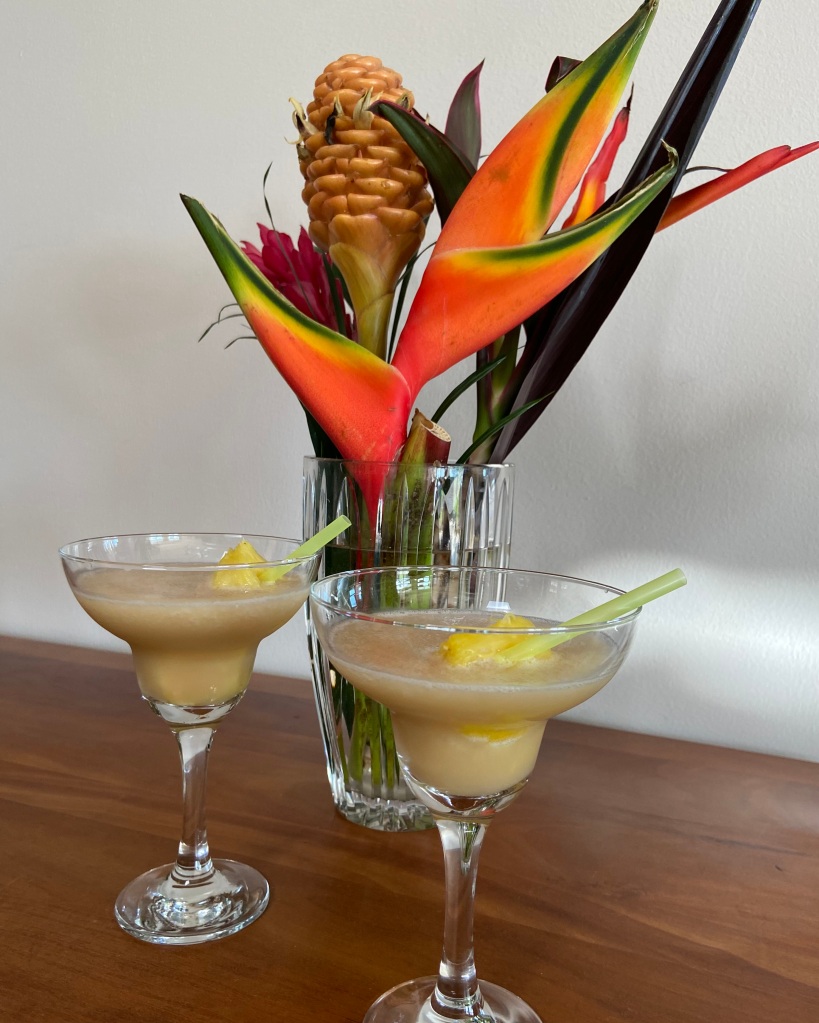
The final choice was even determined while we were still in the dark days and cold of winter. I just never seemed to get around to making the drink until spring had emerged thus my Easter themed picture. And now we are back to 90 degree days where the simplest and most common gin drink is back in vogue. Oh well, here’s my suggestion for next winter.

The Mulled Gin cocktail is great for batching and making ahead. The base includes spices of your choice like star anise, cardamom, cinnamon, allspice and juniper berries. Throw those is a pot and warm them to release the oils. Add 3 parts apple juice or cider (I went with 3 cups), lemon and orange slices and a few tablespoons of sugar to balance. You may need to taste test to make sure that ratio is right. Simmer this mix on low heat for at least 20 minutes then let it sit or steep overnight. Add one part gin (again 1 cup for me) once it is cool. I served it over ice but imagine it would be just as good, or better, as a wam drink.

The most important part of this is the gin. The gin I used stretches the concept of local products yet that is what I would call it. As I said, we were lucky to visit Antilles Stillhouse, meet the owner/distiller (David Murphy) and taste all his products. One of my favorites was his unique Fevergrass Spirit which is unlike any spirit I have tasted before. The plan being a gin cocktail, however, I bought his Pink Gin. This gin starts with a neutral spirit that they distill, includes a mix of botanicals—which are mostly foraged from around Antigua and the Stillhouse garden—and is finished with sorrel flowers to impart a quiet background taste and the unique pink coloring. The perfect gin for this cocktail, and I recommend visiting Antigua to get it.

David’s Gin Drink:

Jonathan will confirm that, growing up in our family of five kids in a seven year span, bragging was discouraged. Comparisons might lead to conflicts, also frowned upon. Yet, though my brothers and sisters weren’t overtly competitive, you cannot be one of five without some comparison lurking in the back of your mind. But maybe that should be an “I statement.” I couldn’t.

One type of personal pronouncement, however, I never had trouble with. I discovered that no one minded when I took credit for messing up. So, let me say, I blame myself for this post’s tardiness. Jonathan may want to say it’s his fault, but he’s wrong. Before I read his portion of this post, I’d mentally reviewed all available deflections and deceptions, I thought of revising the “Next time” message on the last post to make it look like we meant to take several months off. George Orwell might call that “memory hole-ing.”

After our last post, I did make the Pegu Club Cocktail… but in late March. Though still cold in Chicago, nature was by then leaning into spring. You may notice some late winter light in the photo I contributed—our 7th floor unit’s windows face west—but that’s a iPhone effect.

As for the timeliness of my writing, ha. Being a retired person, I could have written my part at least by May 1st. But no. If Jonathan said he was going to send his portion between January and June, I blocked it out. I also take the blame for my retired person’s appreciation of laziness.

In the spirit of deflection, I can at least say that the Pegu Club cocktail doesn’t seem all that wintery to me, despite my having found it in a collection of Top Ten Winter Gin Cocktails. For one thing, the drink was invented in the 20’s at the Pegu Club in Yangon, Myanmar (at the time, Rangoon, Burma), hardly a winter wonderland. For another, the star of the cocktail is lime, not your typical winter fare. Even the Winter Gin cocktails website I consulted placed the cocktail under 40 Best Summer Patio Cocktails as well.

And winter or summer, the Pegu Club cocktail is easy to make and enjoy, using ingredients most savvy cocktailians may have on hand all year:

  • 2 ounces* gin
  • 1 ounce orange liqueur (triple secCointreau, or clear orange curacao)
  • ½ ounce lime juice
  • 1 dash angostura and 1 dash orange bitters
  • For the garnish: lime wedge

Like Jonathan, I’ve tried all sorts of gin and this time made a local choice to use Blaum Bros. Gin from their Distilling Company in Galena, Illinois. My wife and I visited there, and they take a playful and smart approach to spirits. I have no trouble bragging on their behalf.

One note: the two types of bitters threw me at first. I didn’t have orange when I first made the cocktail and, thinking bitters don’t really change much, I substituted grapefruit instead. When I revisited this cocktail recently because my memory was dim (see mea culpa above), I used orange bitters. Doing so revealed how wrong I was.

But, then again, being wrong seems on theme here.

Jonathan’s take: The Mulled Gin cocktail was a wonderful mix of winter spices and tastes it just took me a while to say so. Now I need to go see how that Pink Gin holds up to the heat of summer.

David’s take: Who can say why some cocktails become classics and others, just as elemental and interesting, do not? The Pegu Club is simple and flavorful and might become one of my go-to drinks, winter or summer.

Next Time:

Like The Last Word, a classic cocktail we tried some years ago, the Paper Plane is a similar equal parts cocktail but uses bourbon as its spirit.

Cocktails WITH Eggnog (That Are NOT Eggnog)

Featured

Proposed By: David

Pursued By: Jonathan

Somewhere Alton Brown is sneering. I say that not just because Alton Brown has a resting sneering face but because, in fulfilling this month’s cocktail challenge, I did not follow his instructions, including the part where he explained what I positively absolutely should not do.

But I get ahead of myself. I’ve been watching Drink Masters on Netflix, a cocktail competition series that, with each episode, taught me mixology techniques I’d never considered, like oil-washed spirits, oleo saccharum, liquid nitrogen, and kitchen stills. Most of what the cocktailians did was well out of reach for me—I don’t have the courage to ask my wife if we can keep a tank of liquid nitrogen in our home—but a number of contestants alluded to clarified milk punch. Doable, I thought. Clarified punch has been around for a long time, and, apocryphally, was Ben Franklin’s favorite drink. If he could make it in 1776, why not me in 2022? The basic principle is easy, just add citrus to make dairy curdle, then strain out the curds. Simple because eggnog is dairy. And I happen to have a box of filters left over from our old coffeemaker. Convenient.

O hubris. Jonathan and I have an ad hoc difficulty scale for this blog arising from our first post, which required making peanut orgeat. Between the grinding and the mixing and the squeezing of the resulting sweet mess through cheese cloth, we began to second guess this whole project. Since then, whenever a new mixology technique comes up, both of us have gone back to that moment and shuddered, “Is it harder or easier than orgeat?”

I’m prepared to say that clarified milk punch has an orgeat rating of 1.2, but, after an explanation of the process, perhaps you can assign your own score. For my successful attempt, I cobbled together a recipe using two sources, The Food Channel (Alton) and Liquid Culture. Here are the ingredients I used:

  • 4 Earl Grey Teabags (for 1 cup tea)
  • 2 tablespoons sugar
  • 4 ounces Ruby Port
  • 4 ounces Spiced Rum
  • 3 ounces fresh-squeezed orange juice
  • 1 ounce fresh-squeezed lemon juice
  • 4 oz. eggnog
  • 1 oz. 2% milk

To a clarified punch maven, that list may seem weird (I’m looking at you, Alton). I experimented with the Rum, though Alton (sneeringly) told me NOT to use spiced rum but create a 10-day Allspice dram (for two ounces!). I also adjusted the dairy component, which had much more milk fat than the whole milk Alton demanded. The key for me came from the other recipe, which alerted me that the proper proportion of the cocktail part—everything but the eggnog—and eggnog itself was 4:1. Then again, I didn’t exactly follow that rule either because I made one cup of tea with two tablespoons of sugar to add to the cocktail part. Alton’s idea.

But mixing isn’t the issue with this cocktail. It’s labor. The first time I tried to make it, I did just what Alton and the other recipe said. I poured the cocktail OVER the eggnog. But nothing happened. The eggnog was so thick, the curdling agents didn’t penetrate but just sat on top. Alton said, “Do not shake, stir or molest in any way. Just let the magic happen.” What magic? Okay, okay, so I stirred it. I had to. And the result was too foggy to strain efficiently. The next time I added some 2% milk and the pouring had more effect. I left it relatively unmolested, and it curdled as magically as promised.

The straining, though. It was drip, drip, drip as, within a minute of pouring the liquid into a coffee filter to clarify it, the filter was clogged. Alton, of course, wanted me to use a commercial sized filter (like I had one sitting around, Mr. Brown), and, if not for the memory of orgeat, I might have switched to cheesecloth. Instead, I suspended filters in every strainer we owned and worked in parallel. Even then, I needed to periodically pour the unmoving sludge into fresh filters.

It took a long time, and the yield was, in a word, depressing. The recipe above (20 ounces) will produce about 8-10 ounces of clarified punch. The rest went out with the trash, soaked into a dozen coffee filters.

Was it worth it? The punch was frustratingly delicious, actually. Redolent of eggnog, with all its spices (and I don’t regret the spiced rum, Alton) and beautifully light. Would I make it again? Not until my memory fades.

Jonathan’s Eggnog drink:

Nogatini

It’s not as stark a divide as cilantro, but there are definitely those who love eggnog and those who detest it. The cilantro groups include those with a genetic difference in taste that makes the herb taste like dish liquid no matter its use and those who simply love it in its many forms. I am not proposing that cilantro be added to eggnog, just making the point that I am one who looks forward to this time of year and the excuse to drink eggnog.

The typical way, at least to me, to enjoy nog is with the simple addition of Amaretto, rum or bourbon. A little nutmeg on top and I am good. David’s proposal was to use eggnog in a cocktail, and, while I was not ready to go to the lengths he did to transform it, I wanted to find some ways where it was an addition rather than the star.

The first cocktail we (the season provides the opportunity to foist libations on others) tried was an eggnog martini. The Nogtini, as we took to calling it, is a simple mix of 1 ounce vanilla vodka, 3/4 ounce Amaretto (found a local Amaretto from Oak City) and 3 ounces of eggnog. Shake all of that with ice, strain into a martini glass or coupe and top with grated nutmeg or cinnamon. If you really want to be fancy you can rim your glass with crushed candy cane but honestly this drink is sweet enough without it. This was a popular drink, but it seemed too close to the basic add-a-spirit-to-eggnog.

Nogslide

The Nogtini led to a search for a more standard cocktail where eggnog could be substituted for cream. The Mudslide seemed appropriate especially since it could be dubbed a Nogslide. It’s 1 ounce vodka, 1 ounce coffee liqueur, 1 ounce Bailey’s Irish Cream and 1.5 ounces eggnog. Shake all the ingredients with ice and strain into a martini glass. Top with chocolate shavings or whipped cream and chocolate shavings if you are treating it like the dessert cocktail that it is. This one had more complexity and seemed a little further from the classic. The Irish Cream and nog played better together than I thought they would. It is also really easy to make and looks very nice.

My final tasting was a less sweet cocktail with a little eggnog thrown in. The cocktail was a Black Manhattan (Amaro substituted for the vermouth of the classic Manhattan) with an ounce of eggnog thrown in. In hopes that it would be good, I had a name proposed but was informed it was inappropriate for publication. No problem, though, as there’s really no reason to provide a recipe, picture, review, or inappropriate name. My advice is to try the regular Black Manhattan, try one of the sweet cocktails above or both if you ready for a long winters nap. The Black Manhattan with nog may be better than dish liquid but not by much.

David’s take: novelty has its price, and I think I might have a new appreciation for eggnot in its original form.

Jonathan’s take: the two nog drinks were easy, tasty and festive. What more could you ask for except another perhaps.

Next Time:

Time to get back to a clear liquor. If gin has a season it is summer. We are going to try and shake that up with a winter gin cocktail.

Rum Punch

Featured

Proposed By: Jonathan

Reviewed By: David

Our family, like many, had a tradition of serving punch on holidays like Thanksgiving and Christmas. Or so it seems. David and I have three other siblings and the five of us have discovered that, while we share our upbringing, our memories do not always match. I polled everyone to get their recollection of the ingredients of that traditional punch. The responses ranged from “what punch?” to different suggestions of sugary fake fruit drinks cut with ginger ale. I recall the addition of a bottle or two of champagne and some cut up fruit, but, as the youngest, I think the bubbly did not appear until I was in college and almost everyone else was spread across the country. The most curmudgeonly among us (their word not mine) simply recommended we consign any memory of the mix of something carbonated, high fructose corn syrup and unnatural food dyes to the memory trash heap. Time is already working on that.

My wife’s family had a similar punch tradition. The difference for her is that her Mother and friends were thoughtful enough to collect many of their favorite recipes into a Bridge Club Cookbook that they passed along to their children and now, from that generation, to grandchildren. The cookbook contains over three pages of punch type recipes that are various mixes of the same items described above with the exception that they leaned towards real citrus juices. My favorite, only to read because I will never make it, is called Cheerie Punch. It’s just Cheerwine soda and pineapple juice mixed and served with ice. That should qualify under the carbonated fructose with unnatural food dyes category.

Our cocktail this time is a punch but ventures into the alcoholic variety. Rum Punch, and spirited punch in general, has a long and storied place in the history of drinking. So much so the famous cocktail historian, David Wondrich, has written a history and recipe book about it called Punch: The Delights (and Dangers) of the Flowing Bowl. I recommend reading that for a full history and some excellent recipes to try with friends. For those with less time or inclination though, here are the highlights.

Like the history of cocktails, the history of punch is not definitive nor could it be. The meaning and definition of punch is also a point of discussion. Perhaps the best explanation is also a recipe of sorts. The word “punch” may derive from a Hindi word meaning five. That ties back to the five ingredients included in any traditional punch—citrus, sweetener, alcohol, water, and spices. The recipe mnemonic to go with that is one of sour, two of sweet, three of hard, and four of weak. I guess they just assume you will remember the spices.

The first punches are assumed to have been mixed in the Indian subcontinent and fortified with local distillates like Arrack. From there, punch spread with European colonialism and particularly with the associated ships and sailors. Ultimately, the rum version of punch gained popularity in the Caribbean and in colonial America where rum was the most popular spirit. Some of the most famous of the rum punches, like Fish House Punch, trace back to specific places and clubs where groups gathered to enjoy each others company and shared beverages.

There is some hesitation sharing a single recipe because, as Wondrich repeatedly suggests, punch is something to be practiced and shared. That said, I followed a couple of suggestions to make versions for groups. The first idea was to follow the mnemonic for a base rum punch. My first version was one part lime juice, two parts sugar, three parts rum and four parts water. I dissolved the sugar in the water first and then added the citrus and a mix of two rums. For a second version, I used lemon juice in place of lime and varied the rums. With both batches, I had other juices like fresh orange and pomegranate and spices like nutmeg and ginger for people to add as they saw fit.

There were also two other concepts from Wondrich I found very helpful. It may seem like varying the rums is gilding the lily but it makes a difference. Wondrich recommends having one rum that adds hogo (from the French haut gout) which is a more earthy, gamey or funky rum. I had a cachaca (rum made from sugarcane juice instead of molasses) that fit that bill and it gave the punch more depth. The other idea is to make an oleo saccharum. It sounds difficult but there are basic recipes to mix citrus rinds (orange and lemon in mine) with sugar and then let them sit for a day or two. A liquid will form that can be poured off to create a sweet citrus oil that adds an intense burst of flavor to the punch. Or other cocktails if you have extra!

David’s Review

Neuroscientists see every memory as a reconstruction. The sensory details of taste and smell and sight and sound lay foundations, but, thereafter, each reiteration builds on (and arranges) details, adding narrative, conflation, perspective, consequence. My own memories are heavily edited, and, when conversations with my brothers and sisters turn to the past, I wonder If I grew up in a parallel dimension, am experiencing the Mandela Effect, or discovering a glitch in the Matrix. Apparently, when it comes to family recollections, I’m full of crap. Jonathan says our all-night drive-in viewing of a Planet of the Apes marathon was powered by root beer. I’m sure it was Tahitian Treat.

But, because no one in our family seems to remember Tahitian Treat, perhaps it existed only on my timeline/dimension… or it’s Canadian.

Similar complications surround this family punch Jonathan asked about. I remember it—barely—but it’s become part of a “punch complex” in my brain, mixed with chaperoning dances at schools where I taught or the “Rocket Fuel” of college parties. It’s hard for me to recollect any punch without adding Hawaiian Punch or Tahitian Treat… or both… plus ginger ale and Cold Duck. Many of my memories of punch are sweet—soo sweet—drinks that hid alcohol instead of highlighting it.

Which, for me and rum, might be a good thing. I don’t dislike Rum. I love a Dark and Stormy, but rum isn’t my favorite spirit. In order to make my version of the rum punch, I had to go out and buy a bottle of light rum. Now I have three—dark, light, and spiced. All I need is coconut (kidding). The recipe I used seems more basic than Jonathan’s:

  • 1 1/4 ounces each of light and dark rum
  • 2 ounces pineapple juice
  • 1 ounce freshly squeezed orange juice
  • 1/4 ounce freshly squeezed lime juice
  • 1/4 ounce grenadine

Despite what Jonathan says (sorry), the two types of rum were, candidly, wasted on me, but having fresh juice elevates this drink well over the punches that parade through my memory. Just as Jonathan’s punch template includes spice, my second version substituted spiced rum for dark. That revision added a lot, an important counterpoint to what might otherwise be too sweet, particularly with the grenadine syrup I used.

This version of punch reminds me more of Dickens than Everclear and the basement of the Theta Chi house. If, with the holidays coming up, you find an occasion, this rum punch would be a more refined choice than a lurid red pool with a floating ring of ice or—”Please, no,” he said shuddering—floes of sherbet.

Jonathan’s take: Rum Punch may be the ultimate batch cocktail with which to experiment and share.

David’s take: Though my encounters with punch leave me somewhat punched out, going back to the origin story always produces a fresher alternative.

Next Time (Proposed by David):

Following Jonathan’s lead—and in the spirit of experimentation—I propose we make or invent a cocktail using egg nog that is NOT simply the familiar holiday drink

Frozen Tiki Drinks

Featured

Frozen Painkiller

Proposed By: David

Reviewed By: Jonathan

Retirement is sometimes a window into how others view it. Since I’ve retired, people ask me whether I’ve taken up gardening, what books I’m reading or what I’m bingeing, which language I’m learning, how much I miss rising early and/or commuting, and when I take my nap. My answers seldom satisfy. I’m not ambling to the park to feed the ducks, but I’m not reenvisioning the Dewey Decimal system for fun either. My striving muscles are worn out.

What if I said, “I’ve been trying out frozen tiki drinks”?

You might be surprised to hear—perhaps based on your vision of retirement—that I feel busy. Though more of my days go to tasks I give myself, other chores and commitments pop up. And many hours simply… evaporate.

If you’re wondering where this lengthy introduction is going, here it is: Jonathan and I are a couple of weeks late on this post. I envisioned frozen tiki drinks as a splash to end a hot summer. Here we are in the chill of post-autumnal equinox. While I’m not apologizing—I’m retired, remember—I am explaining. Hey, Wordle takes me a while.

The Tiki drink is its own thing, even without the frozen part. As a class, tiki drinks are tropical in their spirits and additives. Sometimes they include spice either in the rum or as part of the concoction. I was pleased to discover my local grocery store sells fresh pineapple juice because you need pineapple juice, and, if you don’t have cream of coconut in your larder, grab the keys. If your grocery can’t supply tropical flavors, however, R. W. Knudsen makes a good pineapple coconut juice. Good luck finding the little paper umbrellas. 

As for the frozen part, you need an excellent blender or lowered expectations. We blended and blended and still ended up with some chunks. That was fine though. We stopped noticing. Frozen drinks hide their potency. There’s a reason they give off vacation vibes.

The two cocktails I tried were the Frozen Painkiller and that classic, the Piña Colada:

Painkiller:

2 oz. dark rum
.5 oz spiced rum
3 oz. orange juice
2 oz. pineapple juice
.5 oz cream of coconut
1 to 1.5 cups ice
Pineapple wedge and/or nutmeg
(for garnish)

Piña Colada:

2 oz. light rum
1 oz. pineapple juice
.25 oz. lime juice
1 to 1.5 cups ice
pineapple wedge and/or maraschino
(for garnish)

The preparation for both drinks is easy and just what you’d expect: combine and whir. It seems silly to offer an extensive review of either drink, not just because nap time is calling but also because these cocktails are similarly fruit-forward (you really have to use fresh juice if you can). Nonetheless, here are some notes. The Piña Colada will have more of the familiar taste if you use cream of coconut. We used coconut milk, and it seemed to be missing some body. That said, the popularity of Piña Coladas now makes sense to me. I wish I could drink one in October without feeling weird about it. To me, the Painkiller presents a more complex palette of flavors. The two types of rum are very important. We made ours exclusively with spiced rum. Because we rarely use rum, we only stock one kind, and the spice overwhelmed the fruit.

It’s in the fifties today in Chicago, and the sky is a mix of white clouds and gray clouds. The high today may reach 67 degrees. I wonder if there are hot versions of tiki drinks.

Jonathan:

It is possible, likely probable, that I have just not been paying attention. This year, I keep hearing about meteorological summer which is simply the months of June, July and August. That’s in contrast to astrological summer which, of course, runs from vernal to autumnal equinox.

The idea of summer being that time from Memorial Day to Labor Day matches what most of us grew up to understand. The school year ended and began at approximately those dates and we were free to enjoy all those things that defined summer like vacations, swimming pools, camp, hot dogs, and watermelon. That was many years ago for me. I now define summer by heat, baseball, heat, mowing grass and…heat.

As a beer drinker I have also heard people talk about seasons of beer. For instance, in summer, stouts take a back seat to light lagers, wheat beers, and pale ales. The oncoming Autumn brings the arrival of Oktoberfest and pumpkin beers. I will spare everyone my thoughts on the latter and simply say that I drink the beers I like no matter the season.

Our chosen cocktail category is one that I do associate with summer, whatever the time frame. I don’t drink many frozen cocktails and cannot remember the last time I ordered one. It was probably on some summer vacation or in a Caribbean location, whether during actual summer or not. I chose two different drinks that follow the vacation theme and make me dream of a time on some island.

Dirty Banana:

2 oz. aged or dark rum
1 oz. coffee liqueur
2 oz. half and half
1 very ripe banana

Place all ingredients in a blender and add ice (your guess is as good as mine on how much). Blend the drink and garnish with a chunk of banana. The original recipe called for banana liqueur. I have vowed to never buy that again, but, don’t worry, the ripe banana did the trick.

Strawberry Daiquiri (the classic):

1.5 oz. white rum
1 oz. simple syrup
.75 oz. lime juice
4-5 strawberries
Ice

Blend and garnish with strawberry.

One can probably guess from my ice comments that the drinks were good, but I still don’t understand how to measure the ice. As a result, the Dirty Banana was strong (even without banana liqueur) and the Strawberry Daiquiri was weak because I kept adding ice to get it to the right consistency.

Jonathan’s take: Now that it’s Fall, maybe I should try a frozen pumpkin purée drink. Or not.

David’s Take: Okay, so maybe someone out there doesn’t like tiki drinks, frozen or otherwise, but not me.

Next Time (Proposed by Jonathan):

I hope David can buy more rum. The Caribbean theme will continue with a Rum Punch of the maker’s choice.

The Scofflaw

Featured

Proposed By: Jonathan

Reviewed By: David

Jonathan:

The Ted Haigh cocktail book, Vintage Spirits and Forgotten Cocktails, has been a trusted source for blog inspiration. He made an effort to include drinks that may have fallen by the wayside despite using common ingredients. Cocktails so easy to put together beg the question—why were they forgotten?

The most obvious reason for a cocktail going out of favor is that some part is no longer readily available or available at all. The example that comes to mind, and one that is included in Haigh’s book, is the James Bond classic Vesper. That drink calls for Kina Lillet which is no longer made. Haigh and others offer substitutes like Lillet Blanc or Cocchi Americano but you have to wonder what the original was like. As a warning if this inspires you to try it, it’s a hammer. Be careful.

Many older cocktails were very simple and perhaps an obvious mix to disguise the sub par base liquor. There are examples where sugar is clearly a masking agent and early cocktails were little more than liquor, sugar and bitters. Modern cocktails may be trending to the too-complicated-for-home-production side, yet some early versions were left behind as too simple. Early cocktails were often breakfast fare, so maybe the sugar makes sense for that reason too.

The final reason I would suggest for “forgotten” is that tastes change. Brandy is certainly used in a number of cocktails although nowhere near as many as it once was. Other libations come and go in popularity, such as a classic like the Martini or a whole family of drinks such as Tiki drinks. I do not envy the bar owners who have to figure out what is in and what is out.

It’s a mystery as to why The Scofflaw it is not common. It dates back to the original from Harry’s New York Bar in Paris. Any number of drinks have the same origin, like the French 75, and have thrived. They are readily available and have even spawned variations. The ingredients are also fairly standard. The Scofflaw is simple, yet complicated enough to offer varied taste experiences, and I would not classify any part of this recipe as trendy. While it may not be on a lot of menus, I would bet that any cocktail bar of repute would not hesitate to make one upon request with readily available mixers.

The recipe we used:

1.5 ounce rye whiskey. I used a NC local rye called Boykin (Haigh says to avoid Canadian rye)
1 ounce dry vermouth
.75 ounce fresh lemon juice
.75 ounce grenadine (make your own, it’s easy)

Mix all ingredients, shake with ice, strain into a coupe and garnish with a lemon peel. An easy way to vary it to taste is to increase/decrease the lemon juice and/or grenadine.

David:

Portmanteaus like “scofflaw” are interesting, not just because they combine estranged terms but also because of how useful they prove to be. Often, neologisms turn behavior—like scoffing at the law—into identity. Willfully ignore an edict, and you become an amoral or oppositional person. Originally the word “scofflaw” won a contest sponsored by the prohibitionist Delcevere King offering $200 in gold for a description of people who continued to drink despite the 18th amendment.

Now the term has a more general meaning, and, maybe because I like the way it sounds, I use it frequently. Neighbors who refuse to break down boxes for recycling or speed through pedestrian crosswalks are scofflaws, and so are double-parkers, line-breakers, 1 am outdoor party deck revelers, mask droopers, and office candy hogs. ONE peppermint, people!

Sorry, got a little worked up. Some of those “laws” are common decency… or maybe in my head.

Really my feelings are mixed. There’s no disputing that people who have a third piece of pizza before someone else has one are reprobates, but I’m known to scoff from time to time. In fact, in my imagination, I hear my wife snorting at my understatement. I scoff a lot. I scoff because, well, some rules are silly, and I can’t abide the tyranny of a minority deciding for the rest of us.

Delcevere King hoped his term would be derogatory, but, in our world, does “scofflaw” convey so negative a connotation? I wonder what I would have done during prohibition. I can’t picture myself singing the temperance songs my grandmother made my dad memorize. Alcohol isn’t good for you and does contribute to a lot of social ills, but old habits die hard. Plus, while rebellion may be enticing for some (which is why increasing the shame of transgression never seems to work), most prohibition era drinking scofflaws were probably doing what they did before.

Adding onto Jonathan’s history, the scofflaw cocktail was invented overseas, and my research suggests it was not popular in the United States. In fact, if you Google “prohibition cocktails,” you’ll find sources that say Americans only drank highballs during that time. “When your drinking experience is an illegal one,” says Gary Regan, “you just want to get down to drinking.”

The Scofflaw is, in fact, is pretty special for the reasons Jonathan offers above. It’s so simple to make, and very direct in its flavor profile. For the record, I detected no subterfuge, no effort to hide questionable spirits or off-flavors. Yet it’s also just complicated enough, what you hope for in a cocktail, a whole greater than the sum of its parts. On Jonathan’s suggestion, I made my own grenadine, and, maybe I did it wrong, but mine had a syrupy consistency that complemented the acidic lemon and spicy rye so well. If I set out to break the law, any drink might do, but this cocktail clearly aspires to do more than thumb its nose at convention.

Which makes me wonder, does it have the right name?  

Jonathan’s take: I often try the base liquor, in small amounts, by itself first. That really helps you realize how the spiciness of rye shines through in the Scofflaw. Let’s bring this one back.

David’s take: The Scofflaw could easily become my signature cocktail—try to stop me if you think you can.

Next time (Proposed By David):

We have a blender, and I bet Jonathan has one too. It’s time—and maybe overdue—for us to try a frozen cocktail. I have a few ideas, but I’m mostly interested in some frozen version of a Tiki Drink. My rum is getting lonely.

Lemon Basil Cocktail

Featured

JBMDrinkProposed By: David

Reviewed By: Jonathan

This week, Jonathan and I retried this cocktail from July of 2015. It uses some ingredients typical of a margarita, but with a more refined approach.

Jonathan:

One of the best parts of retrying a cocktail is reading our comments from the original take. The first time we tried the Lemon Basil Cocktail I found it to be strong enough that I suggested one was enough. Looking back at that, I wonder what I considered to be a “part” for the recipe. That’s a pretty large glass my drink is in and if my tequila part was a standard shot of 1.5 ounces (the recipe calls for 2 parts tequila), it’s a good thing I stopped at one.

It has also been useful to see if our review suggested some changes to the original. For this try I followed David’s recommendation to go easy on the muddle and my own idea that sparkling lemonade would add sweetness without the simple syrup. The version I tried was lightly smashed lemon with basil leaves, 1.5 ounce tequila, 3/4 ounce orange liqueur, 2 ounces sparkling lemonade and 2 ounces seltzer water. Whatever recipe, the result is still a very nice alternative to a mojito especially for those who are not that keen on mint.

David:

DBMDrinkPerhaps it’s my age but two contradictory impulses hit me every time I try new food or drink. Part of me desires novelty and variety because at my age I’m tired of everything, but part of me remains deeply loyal to my favorites, some nearly as longstanding as  I am. I like to ask beer drinkers a related question, “Are you the sort of beer drinker who always comes home with a new beer, or do you know which six-pack to grab as soon as store door opens?” I’m still not sure of the answer myself, so I like to ask.

Though Tequila is not my favorite spirit, I particularly like it in a margarita and, if I’m in a restaurant where I know the margaritas are good, I will have a very hard time bypassing one in favor of something new. The Lemon Basil cocktail is something new. The basil is powerful—and different—and the flavor of the cocktail is much more subtle than a margarita… though that may be like saying an eye roll is more subtle than a shouting “You’re full of crap!” Like Jonathan, I enjoyed reading what I said before about this cocktail. I called it a “grown up drink,” and that still holds true. The tequila stands its ground against the basil. I was grateful to have a decent bottle on hand.

I have a friend who only drinks cocktails under duress. He says any addition to a good liquor is an adulteration. No drink can shake his resolve, and, like the neighbor in Robert Frost’s “Mending Wall,” he “will not go behind” saying so and “likes having thought of it so well.”

Obviously, as this blog makes clear, that’s wrong. But I have to wonder why, in the seven years since we first made this cocktail, I haven’t, until now, had another… and why I’ve had so very many margaritas.

Here’s the original post:

lemonade 11Occasionally envy hits me when I visit friends with gardens. Our patio gets sun, but it’s city sun, subject to deep shadows much of the day. In years past, we’ve always been able to grow some herbs in small pots, but that’s about it… and some years even those were anemic, besieged by the windy storms that hit Chicago this time of year. Still, it’s nice during the summer to boost a recipe with fresh oregano, thyme, or rosemary.

Basil is an herb well worth cultivating. It smells wonderful, and, with very little care, issues forth leaf after deep green leaf. This year, having moved to a new place about a month ago, we’ve relied on farmers for fresh basil, but it’s the same stuff, only grown by a much greener thumb.

This week’s drink isn’t the first we’ve tried with basil. Next to mint, it may be the most popular herb to add to cocktails. But it isn’t at all like mint. In cocktails like Juleps, mint seems part of the drink’s sweetness. Basil contributes something different, a spicy edge. When it comes to cocktails, “Botanical” may not sound so good to some people, but, in this case, the basil is botanical in being fresh and immediate. Depending on how much you use, it can be the star.

When I wrote the proposal last week, I described the Lemon Basil Cocktail as “another lemonade,” but it isn’t really that. It contains lemon, but the same level of citrus and potency you’d expect from a margarita or mojito rather than the sweet (and not that tart) accompaniment for hot dogs and hamburgers.

The short version: it’s a grown-up drink.

On muddling: like many of the drinks we’ve tried, this one relies on mashing ingredients with a muddler. I have what looks like a little baseball bat for that purpose, and I used it to destroy the basil and lemon to release their flavors. For this recipe, you’re supposed to muddle in the glass, adding triple sec, tequila, ice and club soda only after you’ve used your muscle to render the rest detritus.

I confess I didn’t. Perhaps there’s a limit to how much freshness I can handle, maybe I’m too much of a neatnik, but experience tells me it’s unappetizing to get to the end of a drink and discover a bolus of pulverized pulp. I’ll offer the recipe as it was written, but I squeezed the lemon and did the muddling in a cocktail shaker that strained out all evidence of my muscle. Knowing that I was tossing the remainder, I also used more basil than listed.

Here’s the recipe:

2 parts Silver Tequila
1 part premium triple sec
1/2 lemon
3 basil leaves
1/2 part simple syrup
Club soda

Muddle lemon, basil and simple syrup in a chilled glass. Add ice, triple sec and Silver Tequila. Top with club soda. Garnish with a lemon wheel.

And Here’s Jonathan’s Review:

drinkjbmThis drink follows one of the main themes I have espoused for cocktails. There are simply horses for courses. The literal meaning is that certain racehorses perform better on tracks that match their skills. In the figurative sense the expression is used throughout sports to describe performers who excel since the field, track, course or whatever corresponds well to their strengths.

Whew, that’s a long way to say this cocktail is made for the hot, humid weather in which we are mired.

Last week I watched the beginning of a Chicago Cubs game and some of the spectators were wearing jackets or pullovers. Seriously – long sleeves in July? It is a wonder that people are not heading out to work in shorts and t-shirts here in North Carolina. There have been more days that have reached 100 degrees than any summer since I moved here, and the ones that don’t get that hot come close. For some reason, it refuses to rain but the air hangs heavy like it should. We need long sleeve weather.

The cocktail is a variation on the mojito with basil and lemon tones that acts like a cool breeze. Given the same drink in the fall or winter and I am sure I would find it way too subtle and diluted. In the throes on this summer though, it is the ice bucket challenge, a trip to the mountains, toes in the creek or that special morning in June (the one) when the temperature finally dips to the mid 60’s that we miss so much. The highlight is the basil, which we have used a few times, and it marries with the tequila in a way that mint doesn’t. Instead of accentuating the spirit by adding similar flavors, it contrasts in a savory way that makes the tequila more distinctive and better.

There are two final notes. One of these was plenty. I could have had more, if only for the cooling effect, but something about the mix made it seem more potent than the recipe implies, so one was enough. The second thing is that I would recommend a slight adjustment to the recipe. Unless you are using really large lemons, substitute half of the club soda for sparkling lemonade (there was some left from last week). It boosts the lemon without losing any of the effervescence.

Jonathan’s take: I should have had one to drink and then poured one on my head. That would show this summer.

David’s take: Redolent of summer. How that for vocab?

Next week (Proposed By Jonathan):

Maybe I’m still searching for that cooling effect, but it is time for a frozen drink. We haven’t tried one yet and it seemed like the perfect time to do so. There is one slight problem. I have a name for the drink, The Monkey Incident, but I don’t know what is in it yet. I promise to let David know sometime this week. Just as soon as it comes to me.

Amaro Spritz

Featured

Proposed by: David

Reviewed by: Jonathan

People generally think of an “acquired taste” as something they grow to love with repeated exposure. At my age it’s hard to imagine a time when my acquired tastes were new or strange. Coffee anyone?

I can say, however, that of all the classic categories of bitter, salty, sour, sweet and umami—Jonathan will say more later—bitter may be the most acquired for me.

Though, coffee.

As promised, Jonathan and I each made two types of amaro spritzes. To review, a spritz is a particularly Italian drink that combines seltzer, sparkling wine, and some sort of apertivo. The recipe I used called for one, two, and three parts respectively. And since the apertivo was amaro, I was choosing from many very bitter options.

Perhaps now is a bad time to confess—I’m still not that crazy about Campari and am just getting past tolerating bitter liqueurs, not all that far on my way to enjoying them. Someone suggested Malört as my second amaro, and I actually shuddered. You might ask, “If he doesn’t like amari, why did he proposed making an amaro spritz.” Or maybe you’re thinking, “He isn’t one of those freaks who doesn’t like coffee, is he?”

It’s my upbringing. I learned to like a lot of things my brothers and sisters convinced me I was stupid to dislike, which led me to believe that those disliked things were maybe the best things. It’s twisted, but true. Ask my therapist.

My two amari were Aperol—because Campari is still too bitter and luridly red for me—and Amaro Nonino. The Aperol was a non-decision for me, well on its way to acquisition, but the Amaro Nonino became by second amari when I heard it described as “A bit sweeter and mild on bitterness,” and “a nice stand-alone pour and can even be used as a substitute for Cointreau or triple sec.” Another site described it as one of “the gateway amari.” So, a baby amaro, something I might not even recognize AS bitter.

I told myself I wasn’t wimping out because, according to their website, the liqueur arose from “crossroads of several populations and manifold influences, Roman, Arabian, Celtic, Venetian, and Slavic.” The description also says it is, “The result of the Nonino alchemic art, enriched by important cultural contaminations and great knowledge of botanical varieties also coming from far and exotic lands.” Cultural contaminations? Exotic Lands? C’mon, I ought to get some credit for that.

This week, I’m not the reviewer, so I’ll reserve my judgement until the end, but I will say that this cocktail isn’t designed to be sweet. Unless you use some sparking rose, the amaro will get no help from the other ingredients, and, if you prefer sweet, the Amaro Nonino does offer more of that. Personally, I didn’t mind the relief.

Here’s Jonathan’s Review:

My hard copy and digital library continues to expand. The proposal for an Amaro spritz prompted the purchase of Brad Thomas Parsons’ Amaro: The Spirited World of Bittersweet, Herbal Liqueurs. This is the second of Parsons books in my library, the first being his compendium of information about the concentrated bitters, like Angostura, used in so many cocktails.

One the author’s foundational points in this latest book relates to human taste. The classic categories of taste are bitter, salty, sour, sweet and umami. The first of these, bitter, is often one that people associate with unpleasantness for a reason. Bitter (which is the literal translation of amaro) signals danger to the tastebuds as many toxic foods are bitter. This in turn activates the body’s natural systems to deal with that toxin including saliva and other digestive actions. Understanding this helps explain the aperitif and digestif properties of bitter drinks and cocktails.

A quick aside on the book. One of the many things that Parsons does so well is to provide an encyclopedic listing of the different Amari including cocktails and other ways they may be consumed. Although most Amari are Italian, he also details ones from other countries. That can be good and bad. On a recent trip to Charleston, his information on High Wire Distilling led to a visit, a wonderful Boulevardier with their own Amaro and a bottle of that Amaro to take home. Okay, I take back the “and bad” part.

I have always struggled with pairing cocktails with food. When we first started I intended to match each cocktail to a meal, appetizer, dessert or something. What I have found instead is that, unlike beer and wine in my opinion, cocktails usually exist on their own and have no pairing. If you doubt the beer pairing with food, there is another book I would recommend: The Brewmasters Table by Garrett Oliver of Brooklyn Brewing fame. It was published in 2005 but basic beer types have not changed in centuries so all the concepts are still good.

The Amaro spritz is an exception to that pairing issue for me. As noted in our companion Instagram, we had the Cappelletti Spritz with a rich Italian meal both as an aperitif and with the meal. I felt it was actually better than the standard red wine pairing and, at least in my mind, had the desired effect of aiding digestion.

We also tried a the same spritz with Aperol because, despite a nationwide shortage, we had some. Both cocktails contained 2 ounces Cappelletti/Aperol, 3 ounces Prosecco and 1 ounce of sparkling mineral water. The drink is built over ice and garnished with lemon wheels. I also added some strawberries because it seemed to go well with the color of the drink. I honestly could not tell much difference in the two versions other than a slight variation in the bitter/sweet balance. I would recommend using either Amaro with the single warning that you should use the synthetically colored Aperol if you are turned off by natural food coloring or vegan because Cappelletti is naturally colored using the shells of cochineal insects.

Jonathan’s take: This Spritz was excellent and now I need to try the Amaro I bought. To see how it works as a digestif of course.

David’s take: When it comes to enjoying the Amaro Spritz, I can only say that I am getting there.

The Bee’s Knees

Featured

Bee’s Knees

Proposed by: Jonathan

Reviewed by: David

This introduction and write-up started with a warning I provided David a few weeks ago. I had been pondering how far we have come from our first blog entry in August 2013. Somehow, I had related that to my own long time amusement/obsession with Sasquatch. It’s a stretch, but it may be best to start with Bigfoot.

There is a point when people ask me about my opinion on Sasquatch, or when I prompt them do so, if I am being honest. I ask if they want the short, medium or long answer. The short answer is quite simply “yes.” I am sure that as much as we humans would like to think we know everything, we really don’t. There’s not too much more to it than that.

The medium length response is based on a 2007 trip to the Pacific Northwest. A fellow Boy Scout leader set up a meandering tour of the Olympic Peninsula for our troop, including his finagling permission for us to spend the first two nights on the Quinault Indian Reservation. Our host was their Cultural Minister with the melodic name Leilani Chubby. While traveling, another leader started a poll with the scouts about whether they were Sasquatch believers or skeptics (an estimate would be 60/40 in favor of believers).

Leilani asked if we would like to tour the Quinault Cultural Museum before we left, which we wisely did, and we took that opportunity to get her opinion. It is hard to forget the expression on her face in response to the question because it was as if we had asked “Do the Quinault breathe air?” “Of course,” she replied, because she had both seen and smelled them—with a particularly emphasis on their distinctive and disgusting odor. So the medium length response is also “yes, because I met someone with a very matter of fact first-person response.”

The long answer should require a video of my wife’s very real modeling of the eye roll emoji. Like many subjects of interest, I cannot leave it at a basic questioning. The many “finding Bigfoot” shows have little interest to me, but I have found a few great books on the subject. The best of these, in my opinion, is In The Valleys of the Noble Beyond by John Zada. His study is most notable for all the research that he did along the very rugged coast of British Columbia and his thorough detailing of many first-person accounts. What struck me the most, however, was his exploration of the role of supernatural creatures within indigenous cultures, the psychology of the unknown, and the concept of projection in those first-person experiences. I would recommend reading it yourself, but, in the end, my long answer is that my Sasquatch belief erodes to “maybe” or even “probably not.”

If you had asked me about Bee’s Knees prior to August 2013, my response would have been simple. It’s an expression that means something, or more accurately someone that is the best. I have no idea how that relates to apian joints but it would have been the extent of my knowledge.

The first couple of years we were very diligent about posting on an almost weekly basis. It did not take long for me to recognize the Bee’s Knees as a classic cocktail made with gin, honey syrup and lemon. My medium answer might have even included some discussion about which type of gin worked best.

A few weeks ago my wife and I went to a cocktail bar, and she ordered a Bee’s Knees, which I tasted. Probably time to cue up the eye roll emoji again, but that one taste had me speculating what type of honey they used to get the perfect balance. That led to a discussion about how we had tried a Beer’s Knees cocktail and a the bourbon version (the Gold Rush that David moved to the top of the blog) of the classic. She was no doubt considering gulping her drink and ordering another as I began to debate ways that I could vary the drink to improve on the classic. The long answer is that this mission that David and I embarked upon 9 years ago has created a very real monster although with size 9.5 feet.

The two versions of the cocktail that I made both came from the basic recipe on liquor.com. Mix 2 ounces gin, .5 ounce honey syrup (infused with thyme and peppercorn in the alternate) and .75 fresh lemon juice in a shaker with ice. Strain into a coupe and garnish with a lemon wheel. My neighbor provided some honeycomb sticks on which we added a little straight honey for people to adjust the sweetness if they wanted.

David’s Review:

If you read The Gold Rush post below, you know that most people associate this cocktail and the expression “bee’s knees” with the 20’s and Prohibition. However, I recently learned from the language podcast The Allusionist that “bee’s knees” predates that era, first appearing in print in the 1700s. And, as is the way with slang, people may have been saying it long before they wrote it down.

Which doesn’t get you any closer to why anyone might refer to “bee’s knees” in the first place or how they came to represent something desirable. The Allusionist host, Helen Zaltzman, suggests that—besides rhyming—the attraction of the expression may arise from its improbability. Bees do have knees (though, hey, it’s awfully anthropomorphic to say so), and, being incomprehensively small, they’re nearly fantastical. Zaltzman groups “bee’s knees” with other less popular slang referring to hard-to-picture-or-imagine things, like a “chocolate teapot.” And a number of these superlatives rest on unlikely or impossible body parts: “flea’s eyebrows,” “canary’s tusk,” “snake’s hips,” “kipper’s knickers,” and “monkey’s eyebrows.” Before I heard her list those expressions, I’d never heard anyone use them in conversation, but now I may… just to test them out.

If they catch on, I expect credit.

The name of the cocktail, of course, advertises its connection to honey and, more broadly, to the drink’s extraordinary appeal. Nothing can be better than something that is “the bee’s knees,” which, if you think about it, is an extraordinary claim for a libation. The most delicious and insurmountable combination of ingredients that resists any alteration or improvisation? Does any cocktail deserve that status? Isn’t tinkering the whole point of mixology?

Since my business here is supposed to be reviewing this week’s choice, I’ll weigh in. I love this cocktail, I do. We used rich local honey purchased at a farmer’s market in Lincoln Park, harvested from hives on the Frillman Farms. The combination of honey and lemon is time-tested—sweet and sour, mellow and astringent—and gin adds a welcome complexity. However, it’s also hard to resist playing around with that formula. Hello, there’s more than one sort of gin. And, like Jonathan, I created alternative honey syrups. I infused one with red pepper flakes and another with chopped basil. The hot honey alternative just added a burn to the back end, so, if I tried it again, I might exchange the pepper for another source of heat. Wasabi maybe? More likely, I’d stick to the basil alternative, which complemented gin’s not-so-subtle botany with a barely discernible but interesting complication. Think, “What am I tasting?”

But here’s another wild variation I preferred over the others—creating a sort of gimlet/bee’s knees hybrid by substituting lime juice for lemon. Perhaps cocktailians have already discovered my innovation and named it. Mixology is a world of infinite experimentation. However, I thought it might be fun to call this hybrid “The Bee’s Elbow,” because it sidesteps the clichéd rhyme and evokes a joint much more important to drinking than the knee. As long as we’re anthropomorphizing let’s go whole apian.

Try using “The Bee’s Elbow” in your next conversation.

Jonathan’s take: I am a believer in the classic cocktails. They’ve been around a while for a reason and this one is the perfect balance of tastes.

David’s Take: This classic is indeed a classic, but an adventurous soul should never be afraid to tamper with success.

Next: We have tried different drinks that feature Amaro, such as the Aperol Spritz, and plenty of others that use different Amari in the mix. Our focus next time will be featuring some of the lesser used Amari.

Gold Rush

Featured

IMG_1520Revisited: 5/29/22

Proposed by: Jonathan

Reviewed by: David

Next week, we will be trying and reviewing a classic cocktail, The Bee’s Knees. Here’s a cocktail built from the same premise.

How is it possible? The history of cocktails tells us the first that met that definition and name was created in the early 1800’s. Yet here we are in 2020 and the history of this week’s Gold Rush cocktail, a 3 ingredient mix by the way, is less than 20 years old.

The Bee’s Knees cocktail is more widely known. The lore is that the Bee’s was the result of prohibition era gin being softened with the sweet of honey and the distraction of lemon. The true story it seems is that this gin cocktail traces back to Paris in the late 1920’s. It is attributed to the widow, and adventurer, Margaret Brown. She and her bartender were the first to mix gin (an ample 2 ounces) with honey syrup and lemon (3/4 ounce in most versions). Margaret Brown, by the way, is better known as the Unsinkable Molly Brown – a survivor of the sinking of the Titanic.

The bourbon version of this cocktail, the Gold Rush, did not arrive until the early 2000’s. An investor and bartender, T.J. Siegal, at New York’s Milk & Honey bar created this drink as an alternative to a Whiskey Sour. The honey syrup provides the sweetness and the lemon the acid with bourbon as the perfect foil. As I asked to begin this background – how did it take so long?

The Gold Rush

2 ounces bourbon (don’t skimp and use something you like by itself)
3/4 ounce fresh lemon juice
3/4 ounce honey syrup (I mixed at a 2:1 honey water ratio)
Shake with ice, strain onto ice in a highball glass and garnish as you like. I used some pineapple sage leaves because I had them.

I made a Gold Rush and a Bee’s Knees since I had the ingredients for both. Just sub gin for the bourbon in the latter and serve in coupe with a twist.

Here’s David’s Review:IMG_1510

Make enough cocktails (and drink enough) and you’re bound to consider the fundamental qualities of a cocktail, like how many ingredients it should have, what proportions, which flavors to complement and/or contrast others, or which seemingly peripheral elements like temperature or drinking vessel suit the drink best. No such basic laws actually exist, of course. No Neoplatonic cocktail sits in another plane of reality serving as the ideal for every iteration. However, for me, one cocktailian truth seems fundamental—cocktails should only be a complicated as they need to be.

Back in the old days when I visited restaurants instead of having them visit me with greasy bags and styrofoam, some involuntary skepticism rose up in me as I read the cocktail menu and found drinks with seven or eight ingredients. Many proved wonderful. The ones that wove multiple flavors without hiding any of them showed amazing skill and tested the limits of my preference for only necessary complexity. Other cocktails, however, just seemed muddied by too many and too varied components.

All of which is a long preamble to saying I liked the Gold Rush. When Jonathan proposed it, I immediately thought about the sore throat cure my father-in-law used to give my wife as a child—it was the sixties—but I really appreciated the clarity and sincerity of this drink. Though I might cut down on the honey simple syrup a little bit, this cocktail fulfills my cocktailian Occam’s Razor especially well.

As if often the case when you reduce the number of ingredients, you need to assure the quality of the Gold Rush’s few parts. But, even with so simple a formula, you have a lot of room for experimentation. I can imagine a different bourbon, honey, or Meyers’ lemon (instead of regular lemons) would make a big difference.

Jonathan’s take: I know this will surprise you – but how did it take so long!

David’s take: Could be a classic (and I’m not sure why it’s not)

Jonathan’s proposal for the next drink: We will return to one of the basics the Mule (Moscow and otherwise). I have a feeling that Mezcal will make an appearance in my version.

Chilcano

Featured

Revisited: 5/21/22 (from 2017)

IMG_4854

Proposed By: David

Reviewed By: Jonathan

David: You may not be surprised to hear that revisiting, making, tasting, and reviewing these cocktails is the least challenging aspect of this blog. Take this week. Sure, Pisco isn’t in every liquor store and ginger juice requires a special trip to Trader Joe’s or Whole Foods, but mixing this drink—and most drinks—only requires a little care and caution. As for testing, tweaking, and consuming, what could be easier than that?

And I really enjoyed returning to the Chilchano. I’m not sure why Pisco isn’t a more widely used spirit. In this cocktail, Pisco’s distinctive flavor complements the hot ginger and lime perfectly. I’d love to substitute a Chilcano for the ho-hum margaritas I’m often served with Mexican food.

What IS challenging about this blog, for me at least, is taking the photograph of the drink. I have an instagram account where I post my art and take a lot (a LOT) of pictures, but somehow when it’s time to capture cocktails, eek. I live on the seventh floor of a building in Chicago (where, thus far, it’s only sporadically spring) and have no garden for flowers and little color, really, except for my art. When you add how intimidating Jonathan and Debbie’s amazing photos are, I sometimes sweat.

The obvious solution, a friend told me recently, is to consume the cocktail first and then take a photo of the SECOND drink. Yet, I don’t have the disposition for that. Though someone might think cocktails provide liquid courage, they only offer liquid carelessness for me.

All of which is prelude, however, to saying that I did have a second Chilcano and might have had a third if my conscience hadn’t cut me off.

IMG_0123Jonathan: When we originally tried this cocktail David noted that Pisco was a spirit he went through pretty quickly. I told him that would not be a problem for me on the retake since I was sure I had plenty. Not sure where it went or when I used it but that was not true, thus a new bottle in my Instagram intro this week.

We tried two versions of the Chilcano de Pisco. The first used spicy Blenheim ginger ale, lime juice and Pisco without any ginger juice shot. The results were mixed as the spicy ginger was lost although the floral of the Italia grape Pisco shined. A second version subbed Gosling ginger and Peychaud’s bitters. That was a much better combination with the Pisco and ginger more evenly balanced.

Original Post:

The basis of the featured cocktail was a way to use up some of the different liquors I have accumulated. In the course of doing that though I found a cocktail that answered a nagging non-question and posed another. We will start with the cocktail and work towards the other two things.

The drink is The Chilcano which is a Pisco based drink. It is in the mule/buck style with a slight twist:

2 ounces Pisco
1/2 ounce fresh lime juice
1/4 ounce fresh ginger juice
3/4 ounce simple syrup
Ginger ale (I used 4 ounces)
Angostura bitters

Mix everything except the ginger ale, add ice, top with the ginger ale and garnish with a lime peel. The twist is the ginger juice,which you can buy in small bottles, that adds a real kick to the drink. The simple syrup seemed unnecessary so I left it out as many variations of Chilcano recipes do.

This blog has been an education with huge amounts of information to process both good and bad. One of my least favorites are the lists of in and out cocktails as if you should choose what to drink based on popularity or lack of it. Sometime around the new year I read an article that included expert bartender opinions about cocktails. One of those bartenders suggested that Moscow Mules have overstayed their welcome. His thought was that it did not matter if you liked them—they were over ordered and it was time to move on. So the non-question is whether someone else should tell you what to like. If you want to drink a Mule, do it. If you want a great variation, however, try this.

The other question posed by this drink comes from the name. In Peru, the home of Pisco, Chilcano can be a cocktail or a soup that is considered a cure for hangovers. Chilcano de Pescado is a Peruvian fish soup that traditionally starts with a fish head broth. The idea is that this soup should be consumed the morning after over-consumption to alleviate the ill effects. That made me wonder what folks thought were the most effective and the most odd hangover cures, so I did an informal poll.

The list of effective cures is not too surprising. Sleep, analgesics, and water were clearly at the top of the list. The other common ideas, none of which were fish head soup, included sugary drinks, exercise, and hair of the dog. I’m not sure drinking more is so much a cure as it is putting off the pain or crying for help.

There weren’t too many odd cures, but there were some very specific ones. One person insisted that Dr. Pepper before bed was the magic elixir, one suggested extreme hard labor, and another was just as sure a late night greasy meal was the trick.

Long ago when David would eat such things, he and I tried the latter method. He was living in Louisville and we followed a long night of beers with a stop at the local White Castle for sliders (mini-burgers for the uninitiated) to make sure we felt fine in the morning. I can’t remember if it worked but have tried or seen plenty of variations of that over the years. In college a Greek grilled cheese was a very common end to a night. If that didn’t work, one friend of mine was sure a quick meal of basic McDonald’s cheeseburgers the next day would.

David’s Review:

Clearly, Jonathan hasn’t been taking care of this spirits larder. For me, the pisco we bought oh-so-long-ago is gone… and I may have finished another bottle since then. I could account for my pisco deficit in several ways. First, I have replaced the gin in gin and tonics with pisco and experimented with it in other drinks. I even made a caipirinha with pisco, which was quite good. Second, I try not to buy a new bottle of anything until some other bottle gets empty (see #1). Third, I like pisco a lot. Four, maybe I should stop drinking altogether.

I’d say that, with the exception of the ginger elements, this drink struck me as being very like a caipirinha, but that might be a little like saying “with the exception of beef, beef stroganoff is very like a tofu stroganoff.” There’s an analogy I’m sure Jonathan will understand. The ginger is rather important and finding ginger juice was much more difficult than obtaining pisco. I settled on a “ginger shot,” a nutritional form of ginger juice I found at Whole Foods. Another choice, a bottle of squeezable ginger from our regular grocery, proved too pulpy and too sweet.

Sweetness has become one of my biggest bugaboos with mixology. It seems most drinks are too sweet to me now, and simple syrup—even the ginger-grapefruit simple syrup I made for an earlier recipe—is something (along with Jonathan) I’d skip. Pisco isn’t sweet, but, redolent of grapes, the fruity scent seems enough for me. Plus, the simple syrup seemed to interfere with the Angostura, and I like to taste my Angostura—or what’s it doing there?

Those caveats out of the way, I really liked this drink. While pisco isn’t that distinctive a spirit, it isn’t vodka, which to me is a big blank. But it isn’t like whiskey, scotch, or gin either, flavors that are instantly recognizable and thus a little more touchy to mix. If I had a friend looking to try some new spirit, in fact, I might recommend pisco as a safe bet for something he or she might like.

Oh, and for hangovers, by the way, I always recommend a punishing (and penitent) workout followed by Gatorade or coconut water.

David’s take: If Jonathan still hasn’t exhausted his pisco supply, I’m willing to buy another bottle to help him get to the bottom of it.

Jonathan’s take: Don’t listen to the experts listen to me, The Chilcano is excellent. At least the non-fish head version is.

Next Time (Proposed by Jonathan):

Bees Knees is a classic. We’ll give that one another try and see how if we can find some tweaks to shake things up.

Julep Varietals

Featured

Reposted 5/7/22 (from 5/4/15)

Proposed By: David

Reviewed By: Jonathan

IMG_4800With a wife from Louisville and having lived there for several years, I can’t overlook the importance of the first weekend in May. Derby’s approach, like the pale green buds on trees and the flowers suddenly blooming everywhere, mark another season—and year—passing. With the odd slippage of time produced by the pandemic, the Derby’s been out of whack too, but, starting in April, my mind goes to drinking a Julep.

Truth is, I love mint juleps. Some people reject their sweetness, their potency, their price and wateriness at the racetrack, but not me. What could be better than whiskey and mint? Yet I’ve never ordered or made a Julep on any other weekend. Maybe someday, I’ll stride up to some bar in September or February—you can imagine saloon doors swinging in my wake, if you like—and say, “Barkeep, give me a damn Julep!”

I make my juleps with rye rather than bourbon and that’s about as adventurous as I get. However, the purpose of this revision was to try another variation. Which I reluctantly did. My choice was a Gin Julip recipe from Martha Stewart because gin is one of my favorite spirits and thought gin’s botanicals might play nice with mint. Since the drink involved muddling instead of cooking up some simple syrup in advance, it was easier to make. That’s about the limit of my praise, though. My first and last thought was, “Where’s the brown stuff?”

People often say you become more conservative as you get older, which is not at all something I’ve experienced, except in this case.

Jonathan’s Revised Review:

IMG_0109 (1)On Derby day it always starts with the classic Julep. Most years it is resplendent as the touch of sweetness and herbal mint elevates the very icy bourbon. This year it was okay but my home grown mint failed me.

The alternative drink, in this case the the Oaks Lilly (named for the Friday race at Churchill Downs), did not disappoint though. It is a mix of vodka (1.5 ounce), orange liqueur (.5 ounce, tart cranberry juice (3 ounce), fresh lemon juice .5 ounce and simple syrup (the recipe says .5 ounce but adjust depending on the cranberry). Stir the ingredients, or shake if you prefer, and serve over ice. Garnish with a lemon wheel and berries. The Lilly was both tart and sweet and can be adapted further with a splash of seltzer. For this Derby day it was far better than the favored Julep. Seems fitting.

David will propose our next retake. We will get back to new cocktails but we have to get back to regular posting first.

The Original Post from May of 2015:

JulepDMWhen Jonathan and I went to the Kentucky Derby with our wives in the mid 80s, we parked our infield picnic blanket next to some proto-bros with a water balloon catapult. A couple of races in, they found their range and pinned a poor racing form seller inside his tin hut. An official-looking person arrived with commands to desist, but by then they were out of ammo anyway. Around three in the afternoon, they began launching their uneaten ham sandwiches instead.

People drink a lot at the Derby.

Churchill Downs’ mint juleps have a reputation for being a little watery, but I think I remember downing a few that day. And it makes me laugh when people talk about juleps as a genteel drink. At three parts bourbon to one part simple syrup, home versions can be quite strong. The idea is to sip them, allowing the ice to dilute their potency, but I enjoy them so much I seldom manage it.

A mint julep is technically a “smash,” a group of drinks defined by spirit (not necessarily bourbon), crushed ice, and macerated mint (or basil, or something leafy). The idea is to coat the glass with the oils of the leaf and lend an aromatic quality to the libation. In the classic julep, mint simple syrup is the short cut. In one of the julep alternatives I tried, “The Wild Ruffian,” (here’s a link to the recipe) the syrup is made of peach preserves, and the mint is pulverized with a muddler. That drink also called for cognac instead of bourbon, so I doubt anyone would recognize the concoction as a “julep.” Nor do I think Churchill Downs would ever serve one… or certainly not in the infield.

Another of the drinks both Jonathan and I tried was the Oaks Lily (recipe link), named for the featured race for fillies highlighting the day before the Derby. When I lived in Louisville, seeing the Oaks in the grandstands was actually affordable and accessible for commoners—no more, apparently—and the Oaks Lily is also suitably direct, relying on vodka over bourbon and cranberry and lime juices, plus a splash of triple sec, instead of simple syrup. Not a sprig of mint is to be seen anywhere, so it wouldn’t really qualify as a smash, just a way to preserve Saturday for the real julep.

As Jonathan explains below, he tried yet another julep alternative called a Bufala Negra, but, despite our experimentation, we both needed to make real juleps too. It’s not that they’re fancy—what could be plainer than 3:1 bourbon to syrup?—but they are tradition. And, if they are good enough for infielders, they are good enough for us.

Here’s Jonathan’s Review:

JulepJMIt has been my impression that there are many places where the idea of a mint julep is met with disdain. The drink is decidedly a bourbon concoction, but if you love bourbon you don’t need, or want, the dilution and sweetening of the mint or simple syrup. If it is the latter that you like, there’s a good chance that bourbon is not your favorite. All of that is a shame because of how well the flavors go together.

Many years ago David and I had a very bad bourbon experience, and I had sworn off the stuff. A beach trip with our siblings and families helped with my gradual tolerance, and eventual embrace, of the brown liquor. Each sibling had a night when they were responsible for dinner and a cocktail and David chose to make juleps. The key to his mix was a well-crafted mint simple syrup that, to me, makes the difference in a julep. By mixing mint in the syrup, there is no need for dissolving sugar in water, muddling of mint or waiting for the inevitable melding. The two ingredients just mix with their friend crushed ice and a long sip later make for a wonderful combination.

This week was about alternatives though and we tried a couple of them. The first was a drink that was suggested in Southern Living that both David and I tried. I trust that David has provided the recipe for the Blush Lily which is the magazine’s take on the classic drink. It is a nice alternative for those who don’t like bourbon although some may find it more tart than sweet with lime and cranberry as the juices. We tried adding a splash of Blenheim ginger ale and that seemed to address that aspect as well as extend the drink.

My second alternative julep is called the Bufala Negra. I have no idea where that name came from but it is a mix of bourbon and basil with an interesting twist:

4 basil leaves
1 tsp aged balsamic vinegar
½ ounce simple syrup
1.5 ounce bourbon

Muddle 3 basil leaves, balsamic vinegar, and simple syrup. Add bourbon, crushed ice and stir. Garnish with the remaining basil leaf.

The interesting part of this drink is how well the flavors mix. I was wary of drinking even a small amount of vinegar, but mixed with the basil and syrup it was a great match for bourbon. The end result was a less bourbon forward cocktail that still had the sweetness and herbal qualities of a classic julep.

Jonathan’s Take: The classic julep is still the best, but the Blush Lily is great for those who don’t love bourbon and the Negra is an interesting alternative for those who love variety.

David’s Take: The classic is still king, but the others are welcome variations

Next Time (and a note on this repost):

The last time we made a move toward restarting this blog, we both made The Pimm’s Cup intending to add our thoughts on revisiting the cocktail. That was two years ago. Maybe this time, we’ll manage to revisit the drink of Wimbledon well before the actual sporting event. The Pimm’s Cup is a classic drink of summer, and, like the Julep, there seem to be a number of varieties to showcase. Strawberry are a favorite of Derby parties, and it seems appropriate to make the next drink one that used that fruit.

Pimm’s #1 Cup

Featured

pimmsJMReposted 10/11/21

Proposed By: Jonathan

Reviewed By: David

This drink has intrigued me for a long time. I am not ashamed to admit that it was simply the name and pictures of the drink that did it too. The first part was curiosity about who, or what, Pimm was and whether there were other numbers of cups. Pull out or pull up any well illustrated cocktail guide and one will see what I mean about the pictures. The drink is usually an amber liquid packed with fruit, cucumber, mint and ice. It screams summer.

It ends up that James Pimm was a restaurateur in London who owned an oyster bar. The number 1 elixir he created in the 1840’s was a liqueur of gin, quinine and herbs meant as a curative (what else) and digestif. It was mixed in large batches, much like the punches of American bars of the 1800’s, and served by the tankard or cup full. The popularity increased to the point that it began to spread to other bars, eating establishments, and eventually by the bottle.

The popularity of the #1 continues today. It is a popular summer drink in Britain with various sources suggesting that 40-80 thousand pints are sold during the Wimbledon tennis tournament alone. Even New Orleans claims the drink (erroneously) as a summer cocktail of lower alcohol content for those who don’t want to drink less, but do want to pace themselves. There were other numbers, five others in fact, that were made with different spirit bases but only the #1 and a winter cup are sold widely now.

There doesn’t seem to be one definitive recipe, and I will be curious to see how David concocted it. The basics are one part of Pimm’s #1 to two to four parts mixer with a garnish of fruit, cucumber and mint. The mixer of choice is lemon-lime soda (called lemonade in England apparently), but alternatives include ginger ale or soda water for those who want to cut the sweet. I made three versions but each started with this basic mix of liqueur, cucumber and fruit:

2 ounces Pimm’s #1
1 slice cucumber (recipes said English cuke but I have no idea what that is)
1 wheel of lemon
A few pieces of quartered strawberries
Raspberries, blackberries and blueberries

In the basic version those were stirred together, ice added, and it was all topped with 4 ounces of lemon lime soda that was stirred in lightly. I forgot the mint, but that would have been a good time to add it.

Other versions simply added or substituted. The first was a strawberry version that started the day before. I blended up a bunch of strawberries, strained them through a sifter until I had a cup of liquid, and then warmed that in sauce pan with a cup of sugar to make a strawberry syrup (nothing simple about it). In case you were wondering, it is excellent drizzled over a piece of toast that had been smeared with peanut butter. That’s healthy, right? The final version was the basic recipe with ginger ale instead of lemon-lime soda. The standard Blenheim worked well although someone who really wanted to elevate the drink could try the extra hot. The subtle Pimm’s might get lost in that though.

The end result of all this experimenting is a cocktail as healthy as any we have tried. I tasted the strawberry syrup version, but preferred the basic or the ginger ale mix. All of the tasters ended up digging out the fruit at the end and eating it as the dessert part of the cocktail meal. Tasty.

And Here’s David’s Review:

PimmyMy encounters with British literature, television, and cinema have taught me some important Britishisms like “in hospital” instead of “in THE hospital,” the pronunciation of “Frus-TRAIT-ed” and the spelling of “gaol” instead of “jail.”

This exposure to British culture has also created some lasting curiosities, like, “How do you pronounce ‘Pshaw’?” and “What the hell does Pimm’s taste like?”

Thanks to Jonathan, I can at least tentatively answer one of those questions. As is my practice, I tried a little Pimm’s before adding it to this week’s cocktail. I decided Pimm’s is red. It’s amber, as Jonathan said, but it tastes rather, well… red. It’s not that it’s strawberry or cherry or cinnamon or punch or anything that must be red. It possesses the unspecified flavor of foods with a convenient rather than essential color. It’s citrusy (sort of) and spicy (sort of), which I suppose makes it a good mixer with soft drinks, gin, and other spirits.

By itself, meh.

The proper sort of additives, however, must really make this drink. I made my version with lemon, strawberry, cucumber, and mint. I see how the combination works. Lemon is more sour than sweet, and, when a strawberry is perfect, it’s sweet but also acidic. Cucumber has a surprisingly distinctive settling strength when it’s used indulgently. Mint is aromatic, and, though it’s not as important here as in a julep, it renders the cocktail a more complete sensory experience.

But I also made strawberry syrup. And that syrup… and that Seven-Up. I suspect that, with better strawberries or less sugar, I might like the syrup more, but it was dense and sickly sweet and, for me, sunk any chance of the drink being refreshing or light. The Seven-Up only added to that effect. We tried other versions—my wife had a second made with lemon-lime seltzer and I used tonic for the second version—but both still seemed heavy. If I was going to create a drink like this from scratch, I’d just muddle the cucumber, strawberry, and mint and have done with it.

Of course, I’d like to try this drink at Wimbledon. What drink wouldn’t taste better amid such pageantry? And whenever one of our concoctions doesn’t wow me, I wonder what I must have done wrong, what secret I missed in preparing it. How can such a popular drink not wow me? Perhaps the problem was how I cooked the syrup or the proportions of soft drink to alcohol or the gray (or should that be “grey”) stormy weather outside that seemed to call for a tarp and a rain delay. I don’t know. I just wasn’t blown away.

I’m happy, however, to have a bottle of Pimm’s #1 to experiment with, and some interesting possibilities for its use occurred to me right away. Maybe Pimm’s means to be a supporting player, the understated actor who draws no attention to him or herself but assembles the assemble. I’ll find out.

Jonathan’s take: Some days, like this Mother’s Day spent with Pimm’s, I wish we could stop at favorite drink for a while. Science and experimentation beckons us though.

David’s Take: I wanted to really love it and only liked it.

Next Week (Proposed By David):

We’re moving soon, and I keep staring at my liquor shelf, thinking which bottles are closest to being empty, which contents can be consumed and bottles jettisoned before we load everything else on a truck. Thus, selfishly, I’m proposing a drink called “Moving Sale” invented in his own way by Jonathan and my own way by me. The rules are that it consist of three ingredients we might exhaust. My respect for the spare and simple life grows as we gather our stuff in boxes. Let’s raise a drink to casting off.